What’s Included in a Standard Cleaning vs Deep Cleaning?
Keeping your home or office “clean” can mean a lot of different things. For some people, it means the floors are vacuumed, the counters are wiped, and the bathrooms look presentable. For others, it means the baseboards are spotless, the shower grout is bright again, and the dust that quietly collects behind furniture is actually gone.
That difference matters because standard cleaning and deep cleaning are not the same service. One maintains a space that’s already in decent shape. The other resets a space that needs more detailed attention. If you’re in Chicago and trying to decide which one you need, here’s what’s typically included in each and how to choose without guessing.
What a Standard Cleaning Is (And What It’s Designed to Do)
A standard cleaning is a maintenance clean. It focuses on the visible, high-use areas that get dirty the fastest: floors, bathrooms, kitchen surfaces, and high-touch points. It’s the kind of cleaning that helps you stay on top of day-to-day mess and keep your space consistently presentable.
Standard cleaning is ideal when:
- You’re already cleaning regularly (or have cleaning done regularly)
- The home doesn’t have heavy buildup (soap scum, grease film, dust layers)
- You want a predictable routine (weekly, biweekly, or monthly)
What it’s not designed to do is remove months of grime from edges, corners, grout lines, or “out of sight” areas. It keeps things under control, but it doesn’t fully reset the baseline.
What a Deep Cleaning Is (And Why It Feels So Different)
A deep cleaning goes beyond the surface. It targets the buildup that routine cleaning doesn’t fully remove, especially in areas that are easy to miss until they’re noticeably dirty.
Deep cleaning is ideal when:
- It’s been a while since the last thorough clean (often 2–3+ months)
- You’re noticing grime in bathrooms or grease in the kitchen
- You’re moving in or moving out
- You just finished construction or renovations
- You want a “fresh start” before switching to recurring maintenance
Deep cleaning usually includes more detailed work on edges, fixtures, baseboards, grout, and the spots that don’t get touched during a standard clean.
Standard Cleaning vs Deep Cleaning: The Key Differences (At a Glance)
| Category | Standard Cleaning | Deep Cleaning |
| Goal | Maintain cleanliness | Reset the space to a higher baseline |
| Best for | Ongoing upkeep | Buildup, seasonal resets, special situations |
| Detail level | Surface + high-touch areas | Surface + detail work (edges, buildup zones) |
| Frequency | Weekly/biweekly /monthly | Every few months or as needed |
| Common add-on scenarios | Busy schedules, routine upkeep | Move-in/out, post-construction, pre-event |
What’s Typically Included in a Standard Cleaning (Room by Room)
Standard cleaning is about consistency. Here’s what most standard cleanings focus on.
Kitchen (Standard Cleaning)
- Wipe and sanitize countertops and accessible surfaces
- Clean exterior of appliances (stove, fridge, microwave)
- Wipe cabinet fronts (spot cleaning as needed)
- Clean sink and faucet area
- Sweep and mop floors
Bathrooms (Standard Cleaning)
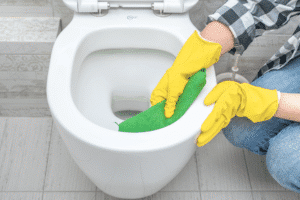
- Clean and sanitize toilet, sink, and tub/shower surfaces
- Wipe mirrors and visible fixtures
- Quick wipe-down of reachable surfaces
- Sweep and mop floors
Bedrooms & Living Areas (Standard Cleaning)
- Dust accessible surfaces (tables, shelves, décor)
- Vacuum carpets and rugs
- Sweep/mop hard floors
- Wipe high-touch points (light switches, door handles)
Commercial Spaces (Standard Cleaning)
- Common area wipe-downs and dusting
- Restroom cleaning and sanitizing
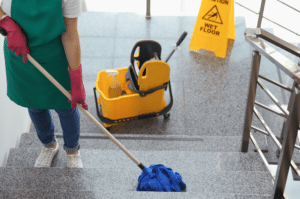
- Floor care (vacuum/mop)
- Trash removal and surface tidying
What’s Typically Included in a Deep Cleaning (Room by Room)
Deep cleaning is where the “hidden dirt” gets addressed. It’s more detailed, more thorough, and usually more time-intensive.
Kitchen (Deep Cleaning)
- Degrease and detail clean around the stove area
- Wipe cabinet fronts more thoroughly (not just spot cleaning)
- Detail backsplash and edges where residue builds up
- Clean sink, faucet, and surrounding buildup zones
- More detailed floor cleaning (edges, corners, under/around reachable items)
Bathrooms (Deep Cleaning)
- Scrub soap scum and buildup more aggressively
- Detail grout lines and tile edges where discoloration starts
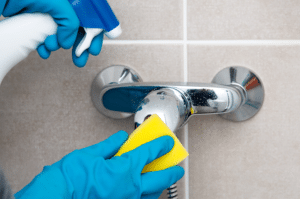
- Descale fixtures (where applicable) and clean around bases
- Clean behind/around toilets and hard-to-reach edges
- More detailed floor and baseboard attention
Bedrooms & Living Areas (Deep Cleaning)
- Dusting that includes edges, corners, and buildup zones
- Baseboards and trim were wiped more thoroughly
- Detail cleaning around furniture edges and common dust traps
- Extra attention to high-touch points and frequently missed surfaces
Commercial Spaces (Deep Cleaning)
- Detailed cleaning of corners, edges, and buildup areas
- Breakroom/kitchenette detail cleaning (grease, residue zones)
- Restroom deep scrub (buildup removal focus)
- More intensive floor detail work, depending on material and traffic
When You Should Choose Deep Cleaning (Instead of Standard)
Sometimes the choice is obvious, but most of the time it isn’t because buildup happens gradually. These are the clearest signs that a deep cleaning is the better fit:
- Your space hasn’t had a thorough clean in 3+ months
- Bathrooms have persistent soap scum, dull fixtures, or darkening grout
- Kitchen cabinets feel sticky or look “filmy,” especially near the stove
- Dust is collecting along baseboards, vents, and corners quickly
- You’re moving in or moving out (and want a true reset)
- You’ve had construction or renovations, and fine dust is everywhere
- Your routine keeps falling behind, and you need a baseline reset
Fast Facts: Why Deep Cleaning Can Make a Space Feel “New” Again
Deep cleaning isn’t just “more cleaning.” It’s cleaning the places that quietly affect how a space looks, smells, and feels.
Fast facts to know:
- Grease and residue can build up on cabinet fronts and around appliances, even when countertops look clean.
- Bathroom buildup often hides in grout lines, corners, and around fixture bases, areas that routine cleaning doesn’t fully restore.
- Post-construction dust is finer than normal household dust and settles on surfaces repeatedly until it’s removed thoroughly.
Did You Know?
Indoor air can be significantly more polluted than outdoor air due to dust, dander, and particles that collect in carpets, upholstery, and on surfaces over time. A deep cleaning helps reduce that buildup, especially in the corners and edges that routine cleaning tends to miss.
Situations Where Deep Cleaning Makes the Most Sense
| Situation | Why Deep Cleaning Helps |
| Moving in | Starts you off with a truly clean baseline in cabinets, bathrooms, and kitchen zones |
| Moving out | Helps meet landlord/property expectations and supports deposit return conditions |
| Post-construction | Removes fine dust and residue that standard cleaning can’t fully capture |
| Seasonal reset | Clears the buildup that accumulates over months (especially in winter and spring) |
| Before guests or events | Gets the whole space to a higher standard quickly |
Standard Cleaning vs Deep Cleaning for Move-In/Move-Out and Post-Construction (Chicago)
If you’re in Chicago and dealing with one of these scenarios, deep cleaning is usually the right starting point:
Move-In / Move-Out Cleaning
Move-related cleaning is about the details that matter most:
- Inside cabinet areas and edges
- Bathroom buildup zones
- Kitchen residue and appliance exteriors
- Baseboards, trim, and floor edges
A standard clean can make a place look “okay,” but move-in/move-out expectations usually require more thorough work.
Post-Construction Cleaning
Construction dust behaves differently from everyday dust. It settles repeatedly, clings to surfaces, and collects in corners, vents, and trim lines. A post-construction cleaning focuses on removing that fine debris so the space is actually livable, not just “visually improved.”
FAQ: Quick Answers Before You Book
How often should I get a deep cleaning?
Most homes benefit from a deep clean every few months, especially if you have kids, pets, frequent guests, or high traffic.
Can I book a deep cleaning and then switch to standard cleaning?
Yes, this is one of the most common (and most effective) approaches. Deep cleaning sets the baseline, then standard house cleaning maintains it.
Is deep cleaning worth it if my home looks “mostly clean”?
If you’re noticing dull bathrooms, sticky kitchen residue, persistent odors, or dust buildup along edges, deep cleaning is usually what gets you back to “actually clean.”
What’s the difference between deep cleaning and post-construction cleaning?
Post-construction cleaning is a specialized type of deep cleaning focused on fine dust and residue left behind after renovations or building work.
What OCD Cleaning Can Help With
OCD Cleaning provides standard cleaning and deep cleaning for both residential and commercial spaces, plus specialty situations like move-in/move-out cleaning and post-construction cleaning. Whether you need ongoing maintenance or a full reset, the right service comes down to your current baseline and how quickly you want the space to feel truly clean again.
Ready for a Cleaner Space in Chicago?
OCD Cleaning Chicago serves Chicago homeowners, renters, and businesses with reliable standard cleaning, detailed deep cleaning, move-in/move-out services, and post-construction cleanups. If you’re ready for a space that feels genuinely reset, not just surface-tidy, request a free quote or book your cleaning today!