Drywall dust has a way of getting everywhere. It settles on floors, clings to walls, coats windowsills, and sneaks into vents, then comes back out. If you are looking for how to clean drywall dust, you are probably dealing with that fine, chalky layer that keeps coming back even after you wipe it up. The trick is using the right order of operations, so you don’t keep kicking dust back into the air or smearing it onto surfaces.
For Chicago homes, drywall dust cleanup often happens alongside busy schedules, kids, pets, and limited time to keep rooms sealed off. This guide breaks down the best way to clean up drywall dust, what tools make the biggest difference, and when it is worth hiring a post-construction cleaning crew to get your home truly livable again.
Why Drywall Dust Clings to Every Surface
Drywall dust is extremely fine, and it behaves differently than normal household dust.
Here is why it sticks around:
- The particles are lightweight and stay airborne easily
- It settles into tiny surface textures, including paint, grout, and wood grain
- Static makes it cling to walls, trim, and electronics
- Walking through the space re-suspends dust into the air
- HVAC airflow can pull it into vents and spread it further
Because it is so fine, dry wiping often just moves it around instead of removing it.
Is Drywall Dust Harmful to Your Household?
Many homeowners ask if drywall dust is harmful, and the short answer is that it can be irritating, especially in large amounts.
Potential concerns include:
- Eye, nose, and throat irritation
- Coughing or breathing discomfort
- Worsened asthma or allergy symptoms
- Skin dryness or irritation
Drywall dust may also include silica and other additives depending on the materials used. If anyone in the home has respiratory sensitivity, take extra precautions and use proper filtration during cleanup.
Gear That Makes Dust Cleanup Easier
The right tools make a huge difference when you are figuring out how to clean up drywall dust without spreading it.
HEPA Vacuums vs. Standard Shop Vacs
Vacuuming drywall dust is safest with a HEPA-rated vacuum because it captures fine particles instead of blowing them back out.
Key differences:
- HEPA vacuums trap very fine dust and reduce airborne spread
- Standard shop vacs may exhaust fine dust back into the room unless they have a true HEPA filter and sealed system
- A brush attachment helps lift dust from surfaces without scratching
If you only have a shop vac, make sure it has the right fine-dust bag and filter, and avoid using it without proper filtration.
Microfiber Cloths and Damp Mops
Microfiber is designed to grab dust instead of pushing it around.
Helpful items:
- Dry microfiber cloths for the first pass on surfaces
- Lightly damp microfiber cloths for final wiping
- A damp mop for hard floors, rinsed frequently
Avoid fluffy dusters that scatter particles into the air.
Masks, Gloves, and Eye Protection
Dust cleanup is easier when you protect yourself.
Basic protective gear:
- A well-fitting mask, ideally N95 for fine dust
- Gloves to prevent skin irritation
- Eye protection if you are cleaning overhead surfaces or vents
Even a short cleanup session can stir up a lot of dust.
The Best Way to Clean Up Drywall Dust
For the best way to clean up drywall dust, follow two rules: don’t wipe first, and work top to bottom.
Let Fine Particles Settle Overnight
If you just sanded or cut drywall, give the dust time to settle.
This helps because:
- Less dust stays airborne while you clean
- You reduce how much you breathe in
- Vacuuming becomes more effective
If possible, keep doors closed and HVAC off during this settling period.
Work From the Ceiling Down to the Floor
Always clean high surfaces first so you don’t re-dust areas you’ve already finished.
A good order:
- Ceilings and light fixtures
- Walls, trim, and doors
- Windowsills and ledges
- Furniture surfaces
- Floors last
Vacuum Before You Wipe Anything
Vacuuming first removes loose dust without smearing it.
Vacuum these areas first:
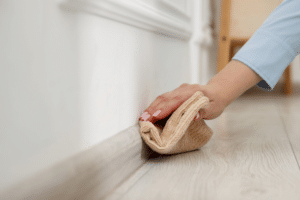
- Baseboards and trim edges
- Window tracks and sills
- Floors, including corners and under furniture
- Upholstery and soft surfaces
- Stairs and landings
Use slow passes and a brush attachment where possible.
Finish With Damp Wiping and Mopping
Once you remove the loose dust, damp wiping picks up the fine film.
Finish with:
- Lightly damp microfiber cloths on hard surfaces
- A damp mop on hard floors, rinsed often
- A final vacuum pass after everything dries
Do not over-soak surfaces, especially wood floors and painted walls.
Removing Sheetrock Dust From Hardwood and Carpet
How to clean sheetrock dust depends on the surface, because drywall dust can scratch hardwood and embed into carpet fibers.
For hardwood:
- Vacuum first with a soft brush attachment
- Use a barely damp microfiber mop
- Avoid gritty sweeping, which can scratch the finish
- Change rinse water often so you are not spreading dust
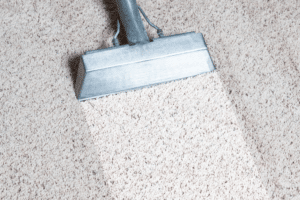
For carpet:
- Vacuum slowly in multiple directions
- Empty the canister or change the bag frequently
- Use a carpet rake to lift dust from the pile before vacuuming again
If the carpet still feels dusty after several passes, you may need professional cleaning.
Vents, Filters, and Returns: The Hidden Dust Traps
Drywall dust often ends up in HVAC systems, especially if the system ran during the project.
Focus on:
- Replacing HVAC filters after the work is done
- Vacuuming vent covers and return grilles
- Wiping around vents where dust collects on walls and ceilings
- Checking inside returns for visible dust buildup
If you see heavy dust inside ductwork, consider a professional evaluation.
Cleanup Mistakes That Spread Dust Room to Room
A few common mistakes can make drywall dust cleanup take much longer.
Avoid:
- Dry sweeping, which launches dust into the air
- Using a feather duster, which spreads particles
- Wiping with a wet rag before vacuuming, which creates sludge
- Running the HVAC system without a clean filter
- Walking through dusty areas into clean rooms without changing shoes
- Cleaning floors first, then dusting higher surfaces
Keeping doors closed and using a simple top-down routine helps contain the mess.
When to Hire a Post-Construction Cleaning Crew
Sometimes the fastest path to a clean home is professional help, especially after major work.
Consider hiring a crew when:
- Dust is spread through multiple rooms
- You have textured walls, lots of trim, or high ceilings
- Anyone in the home has asthma or allergies
- You need the home ready quickly for move-out or guests
- Dust is in vents, returns, and hard-to-reach areas
A post-construction cleaning team can handle detailed vacuuming, wiping, and floor care with the right equipment.
Enjoy Your Remodel Without the Dusty Aftermath
Cleaning drywall dust comes down to using the right tools and the right order. Let dust settle, vacuum before wiping, work from the ceiling down, and finish with damp wiping and mopping. For a truly clean home after a remodel, OCD Cleaning offers post-construction and deep cleaning services in Chicago, IL. Our team removes drywall dust from surfaces, floors, and hard-to-reach areas so you can enjoy your updated space without the dusty aftermath.