A busy restaurant can go from clean to chaotic fast. With constant foot traffic, grease buildup, food prep, and restrooms used all day, restaurant cleaning isn’t something you can leave to memory. A written restaurant cleaning checklist keeps standards consistent across shifts, helps staff move faster, and reduces the risk of missed tasks that can lead to odors, pests, or inspection issues.
For Chicago restaurants, having a reliable restaurant cleaning schedule is also a practical way to stay ready for health inspections and protect your reputation. The checklist below breaks tasks into daily, weekly, and monthly priorities, plus a commercial kitchen cleaning checklist focused on the areas that tend to cause the most problems.
Why Every Restaurant Needs a Written Cleaning Plan
A written plan makes cleaning repeatable, even when staff changes, or the restaurant gets slammed.
Key benefits include:
- Clear expectations for every shift
- Less confusion about who cleans what
- Fewer missed tasks in high-risk areas
- Easier training for new team members
- Better consistency for inspections and guest experience
A checklist also helps managers verify that tasks were completed, not just started.
Daily Restaurant Cleaning Tasks
Daily cleaning keeps the restaurant safe, presentable, and under control. Complete these tasks every shift, with extra attention during close.
Dining Room and Guest Seating
Focus on what guests see and touch most often:
- Wipe and sanitize tables, chairs, and high chairs
- Clean menus, kiosks, and payment devices
- Spot clean walls, booths, and chair backs
- Sweep and mop floors, including under tables
- Empty trash and replace liners
- Clean glass doors and entry windows as needed
Cook Line and Prep Stations
Daily kitchen cleaning reduces grease buildup and cross-contamination risk:
- Wipe and sanitize prep tables and cutting surfaces
- Clean and sanitize slicers, mixers, and small equipment
- Degrease cook line surfaces and backsplashes
- Clean grills, flat tops, and range areas per manufacturer guidance
- Empty crumbs and debris from toaster and warming areas
- Sweep and mop kitchen floors, including under mats
- Empty trash, clean lids, and sanitize trash areas
Restrooms and Entryways
Restrooms and entry points affect guest trust immediately:
- Clean and disinfect toilets, sinks, and touch points
- Refill soap, paper towels, and toilet paper
- Clean mirrors and spot-clean walls
- Mop floors with disinfectant
- Empty trash and sanitize trash cans
- Sweep entryways and clean mats
- Wipe door handles and push plates
Weekly Jobs That Keep Grime From Building Up
Weekly tasks help prevent the slow buildup that leads to odors, pests, and sticky surfaces.
Weekly priorities often include:
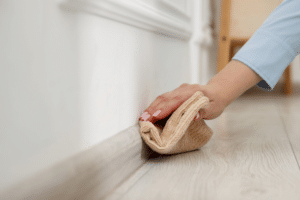
- Detail clean baseboards, corners, and wall edges
- Clean behind and under movable equipment
- Scrub floor grout and high-traffic areas
- Clean and sanitize trash cans inside and out
- Wipe down shelving, dry storage, and prep carts
- Clean vents, fan covers, and reachable ceiling areas
- Deep clean beverage stations, soda nozzles, and ice bins as required
- Clean walk-in cooler door gaskets and handles
Monthly Restaurant Deep Cleaning Priorities
Restaurant deep cleaning should target areas not fully addressed during daily close.
Monthly priorities often include:
- Deep degrease walls and backsplash areas near the cook line
- Detail clean behind heavy equipment that is rarely moved
- Clean ceiling tiles and high ledges where dust collects
- Descale sinks and faucets where mineral buildup forms
- Deep clean floors, including under equipment and around drains
- Inspect for pest entry points and clean hidden crumbs and debris
- Clean light fixtures and remove dust buildup
Monthly deep cleaning is also a good time to review your checklist and adjust tasks based on what is actually getting dirty.
Commercial Kitchen Cleaning Checklist Must-Haves
A restaurant kitchen cleaning checklist should focus on grease control, food safety, and odor prevention. These areas tend to create the biggest issues if you skip them.
Hoods, Grease Traps, and Fryers
Grease management is critical for safety and compliance:
- Wipe exterior hood surfaces and surrounding walls
- Clean hood filters on a set schedule
- Empty and clean grease traps per local requirements
- Clean fryer exteriors and surrounding floor areas
- Filter fryer oil as required and clean oil handling tools
- Degrease nearby surfaces where splatter builds up
Some hood and duct work requires licensed service. Do not assign tasks outside staff scope.
Walk-In Coolers and Freezers
Cold storage cleanliness supports food safety and reduces odor:
- Wipe spills immediately and sanitize shelves
- Rotate stock and remove expired items
- Clean door gaskets and handles
- Sweep and mop floors, including corners
- Clean fan guards and reachable vent covers
- Check for ice buildup and report issues early
Dish Pit and Floor Drains
Dish areas and drains are common odor sources:
- Clean and sanitize dish machine exterior and surrounding surfaces
- Clean sprayers, screens, and catch baskets
- Scrub sinks and surrounding splash zones
- Clean floor drains and drain covers
- Degrease floors and remove buildup around edges
- Empty trash and remove food debris from the area
Staying Ready for a Chicago Health Inspection
Health inspections are easier when your cleaning plan is consistent and documented.
To stay ready:
- Keep a written restaurant cleaning schedule posted for staff
- Use checklists that can be initialed by shift leads
- Focus on food contact surfaces, cold storage, and handwashing stations
- Control grease buildup and keep floors and drains clean
- Store chemicals properly and label bottles
- Keep trash areas clean and lids closed
The goal isn’t just to pass an inspection. It is running a cleaner, safer kitchen every day.
Building a Restaurant Cleaning Schedule for Staff
A schedule works best when it is simple, assigned, and realistic for your staffing.
A practical approach:
- Assign daily tasks by station, not by person
- Add weekly tasks to slower shifts or specific days
- Rotate monthly deep cleaning items so they get done consistently
- Use a manager walk-through checklist for verification
- Track recurring issues and update the plan
If staff are unsure what good looks like, include photos or short standards for key areas.
When to Bring In a Professional Cleaning Crew
In-house cleaning is essential, but professional support can make sense at times.
Consider a professional crew when:
- Grease buildup is getting ahead of your team
- You need restaurant deep cleaning after a busy season
- You are preparing for an opening, relaunch, or inspection
- Your staff is stretched thin, and consistency is slipping
- You want overnight cleaning to avoid interrupting service
A professional team can also help reset the space so daily cleaning is easier to maintain.
Keep Your Restaurant Guest-Ready Every Shift
A reliable restaurant cleaning checklist keeps your dining room welcoming, your kitchen safer, and your team aligned across shifts. OCD Cleaning provides commercial cleaning support for Chicago, IL restaurants, including deep-cleaning services designed to keep you guest-ready and inspection-ready. If you want a cleaning plan that actually works in a real kitchen, our team can help you build consistency shift after shift.